
From the patient's account to the general ledger.
Benefits verified before the chair, claims worked as a queue, EOBs posted by rule, deposits reconciled against the bank, a budget against actuals, and in-house financing with real underwriting. Not a bookkeeping export. The books, in the PMS.
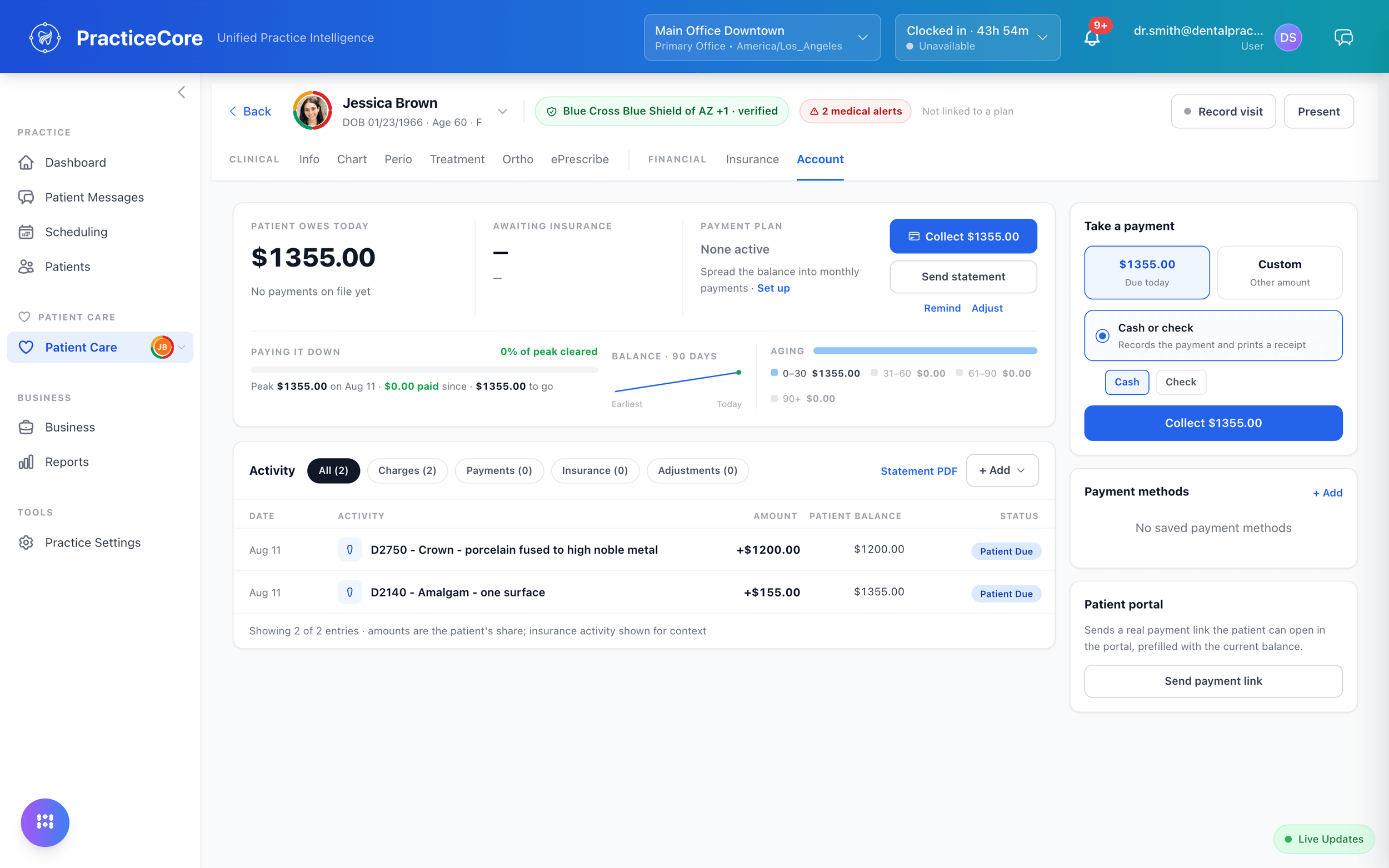
Payment plans the practice configures.
Terms the practice sets, tracked against the balance automatically. The patient sees the schedule; the ledger sees the truth.

What they owe, and for how long.
The balance today, aging in 30-day buckets and the ledger behind it, on the same patient record as the chart. There is no separate billing program to open.

The patient side.
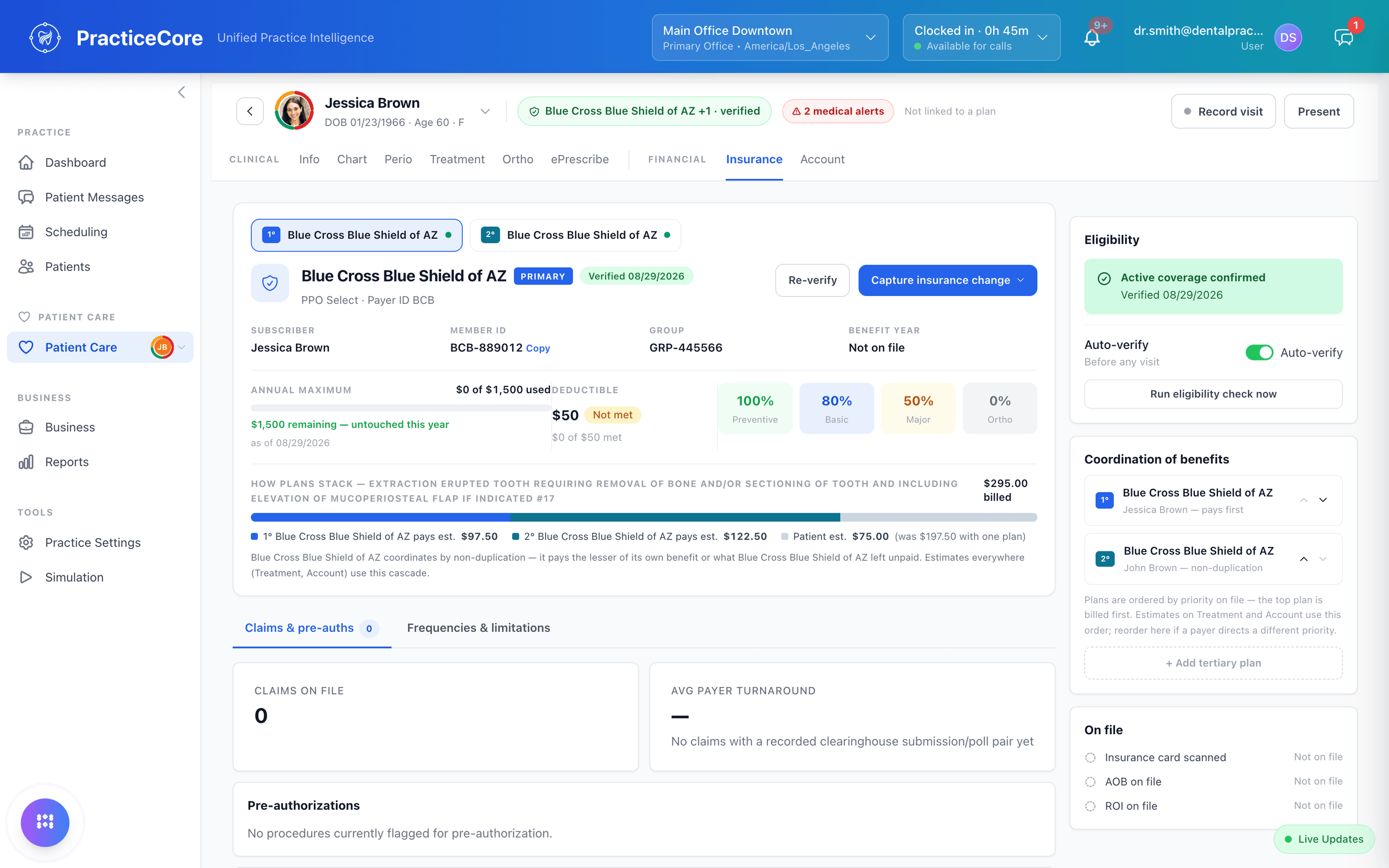
Know the benefits before the chair.
Eligibility verified, annual maximum and deductible tracked, coverage by category, coordination of benefits across plans, claims and pre-authorizations on the same tab. The estimate the patient sees is built from this, so the number in the chair is the number on the statement.
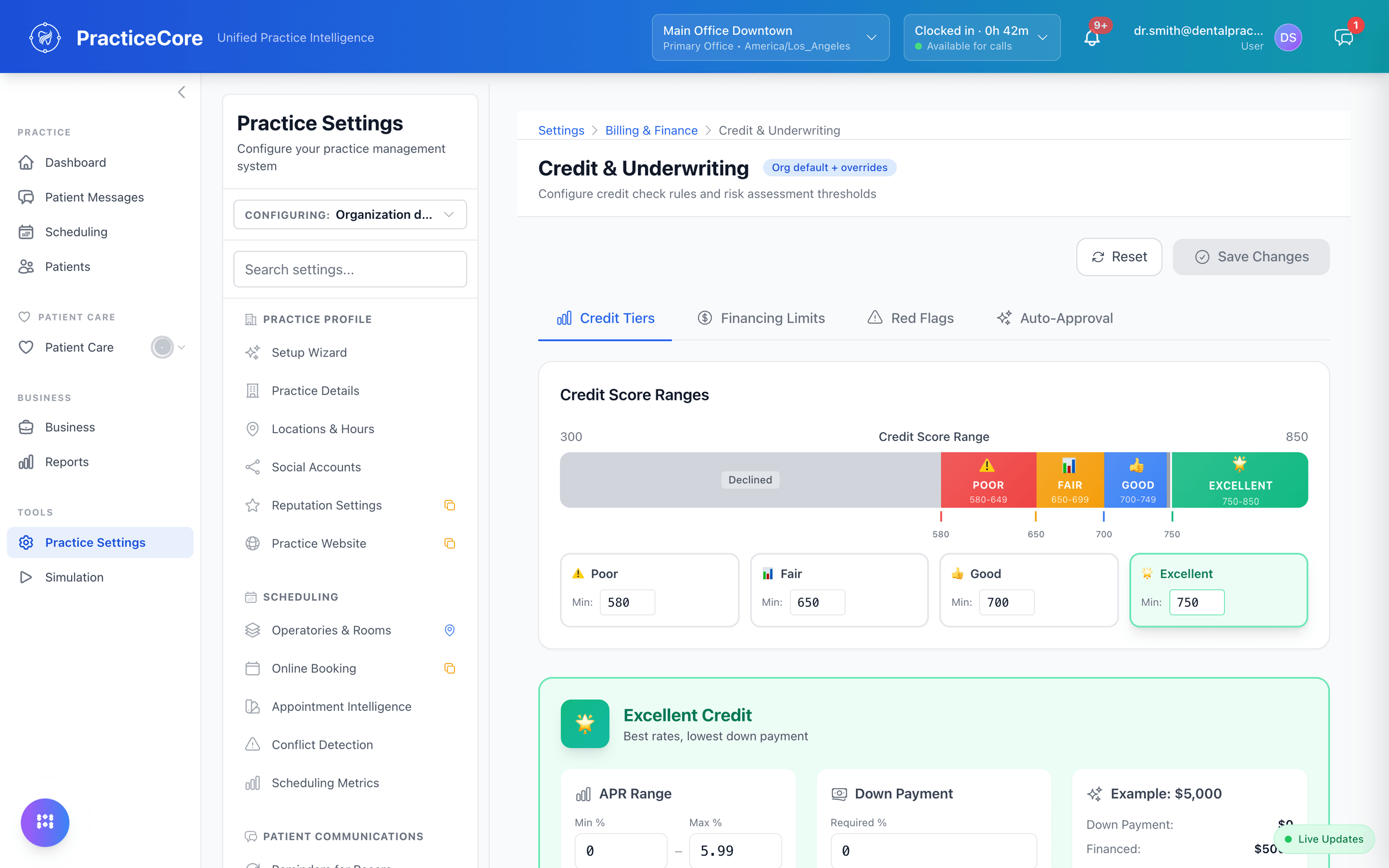
Payment plans with real underwriting.
In-house financing the practice configures: credit score tiers, APR ranges, down-payment rules, red flags and auto-approval. The plan is offered in the treatment conversation and tracked against the balance automatically.
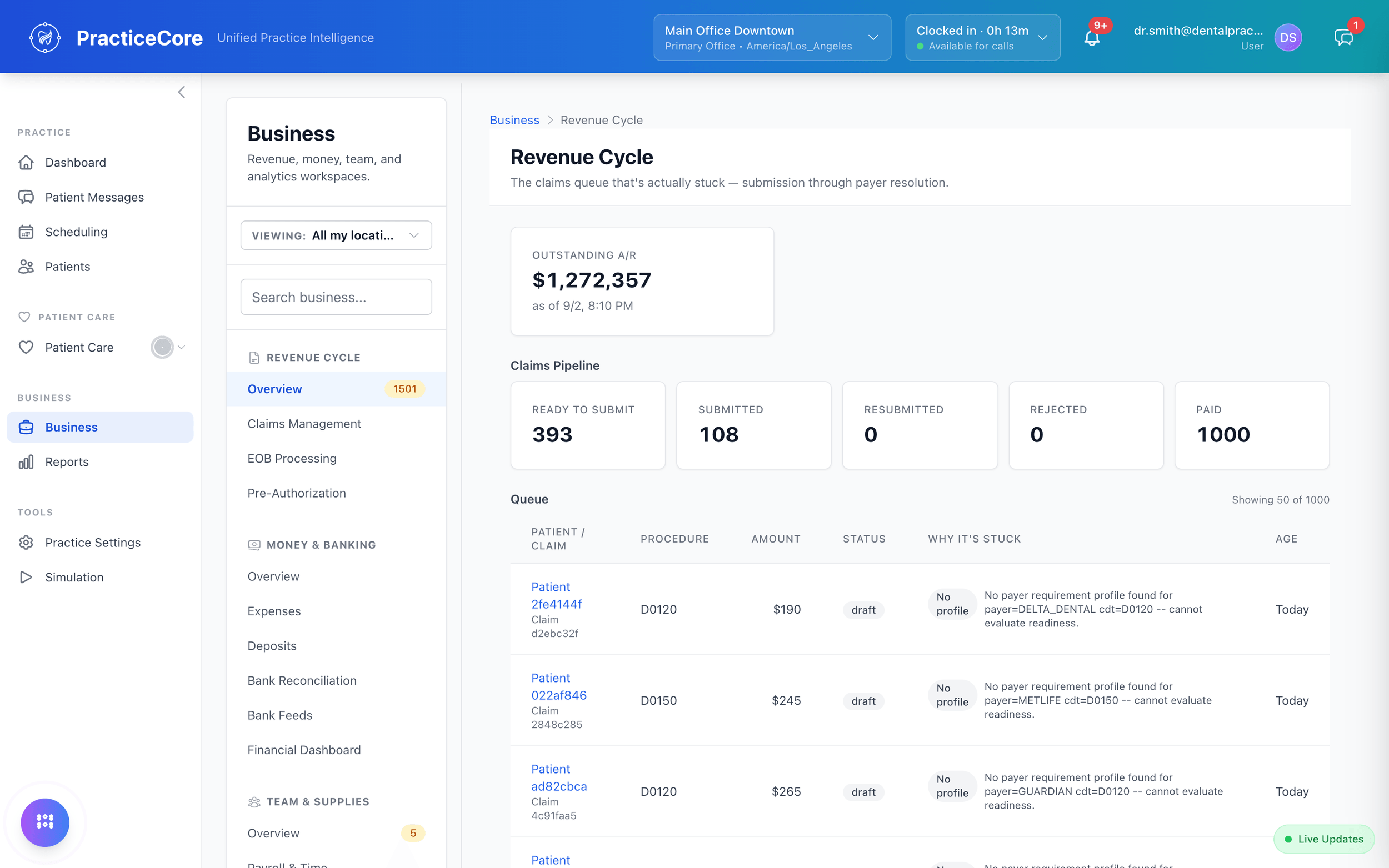
The revenue cycle.
Claims, worked as a queue.
In flight, needs action, average days to payment, denial rate. Every claim from service to payment, with the ones that are stuck at the top.
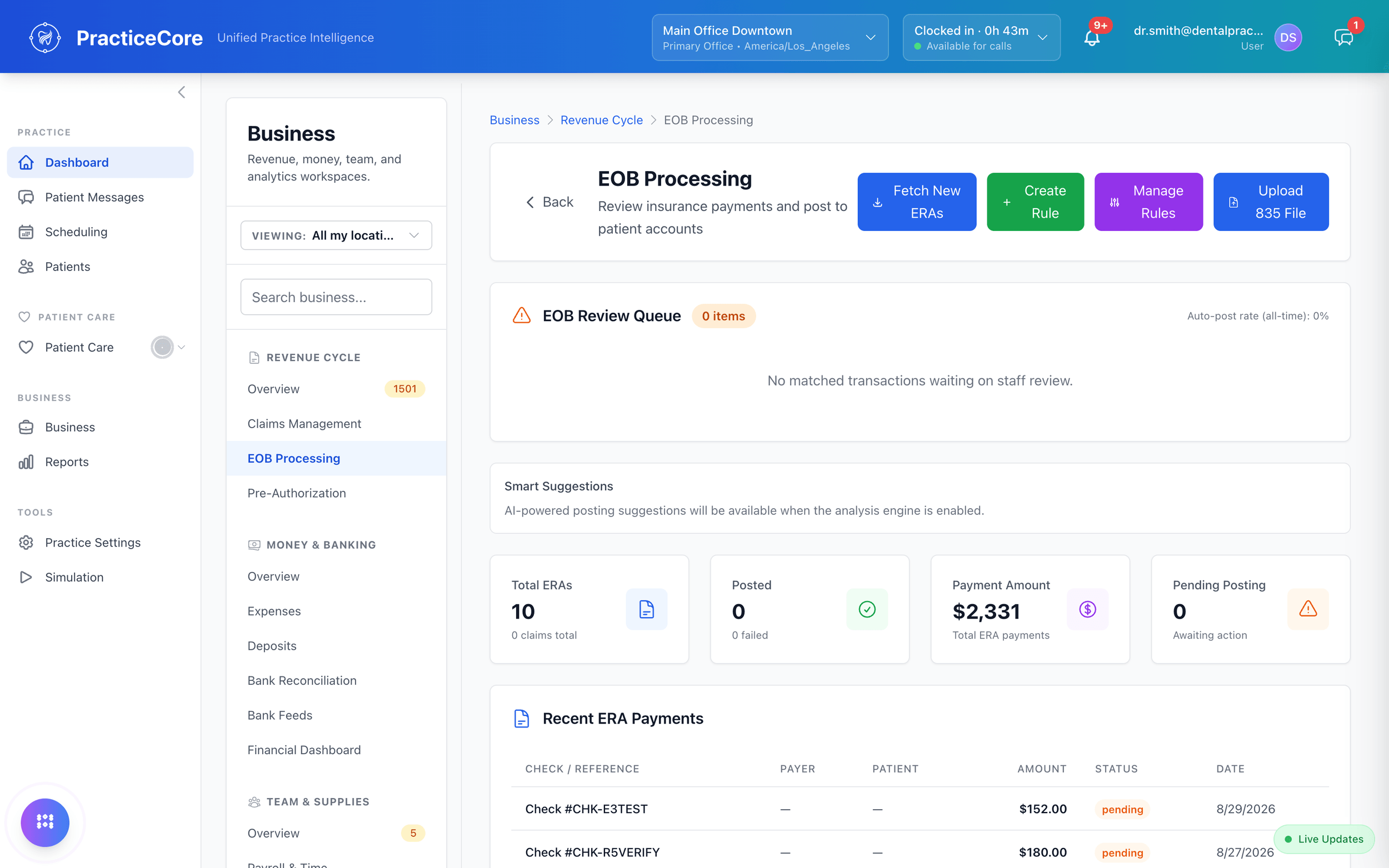
EOBs that post themselves.
Fetch new ERAs, review what the rules could not settle, upload an 835 when a payer mails one. Posting rules do the rest.
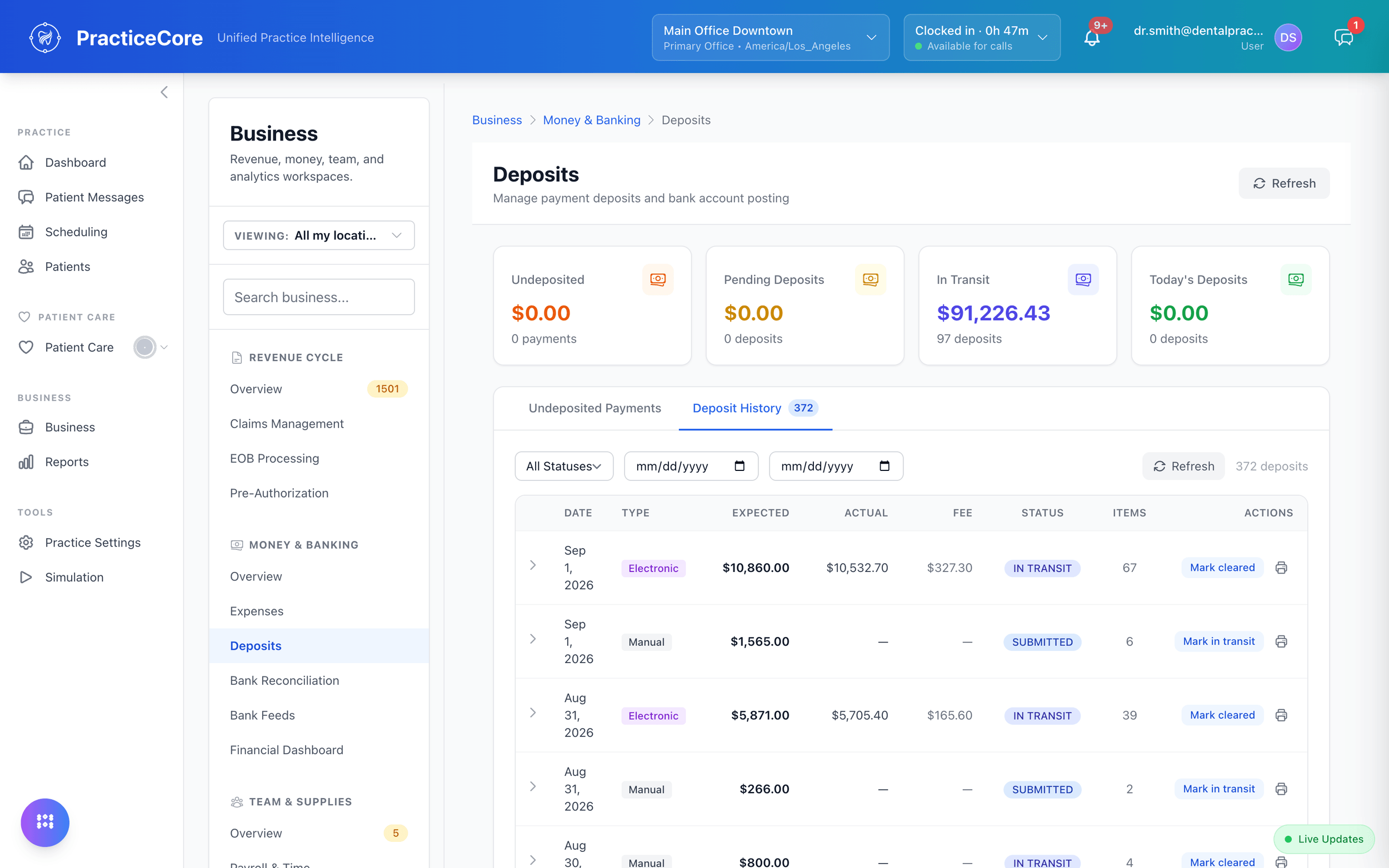
Deposits, then the bank.
Undeposited payments, pending and in-transit deposits, and a deposit history with expected against actual. Then reconcile the book balance against each bank account's feed.
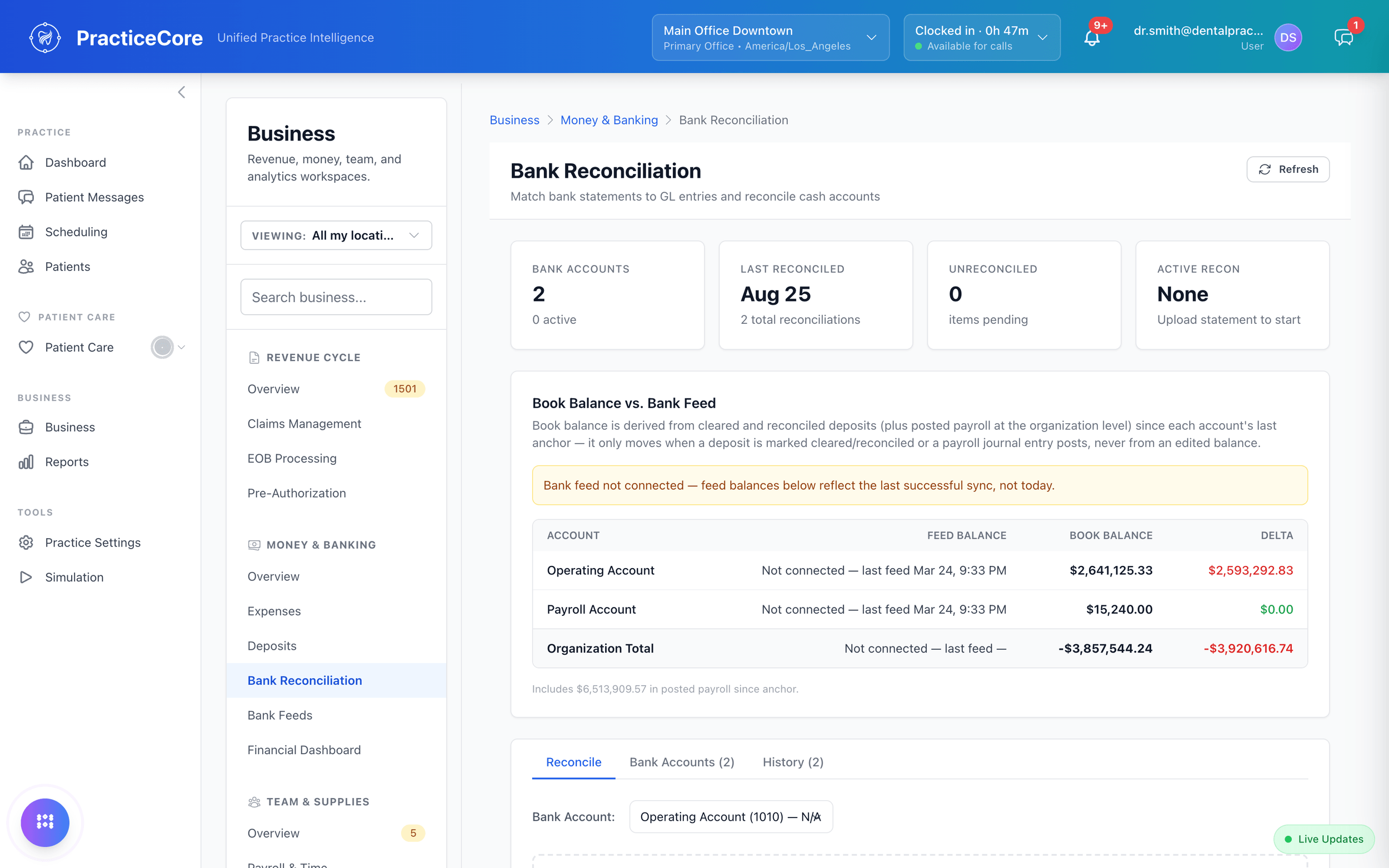
Bank reconciliation, in the same system.
Book balance against the bank feed for every account, and a reconciliation history. The cash position is a screen, not a spreadsheet somebody keeps.
The books.
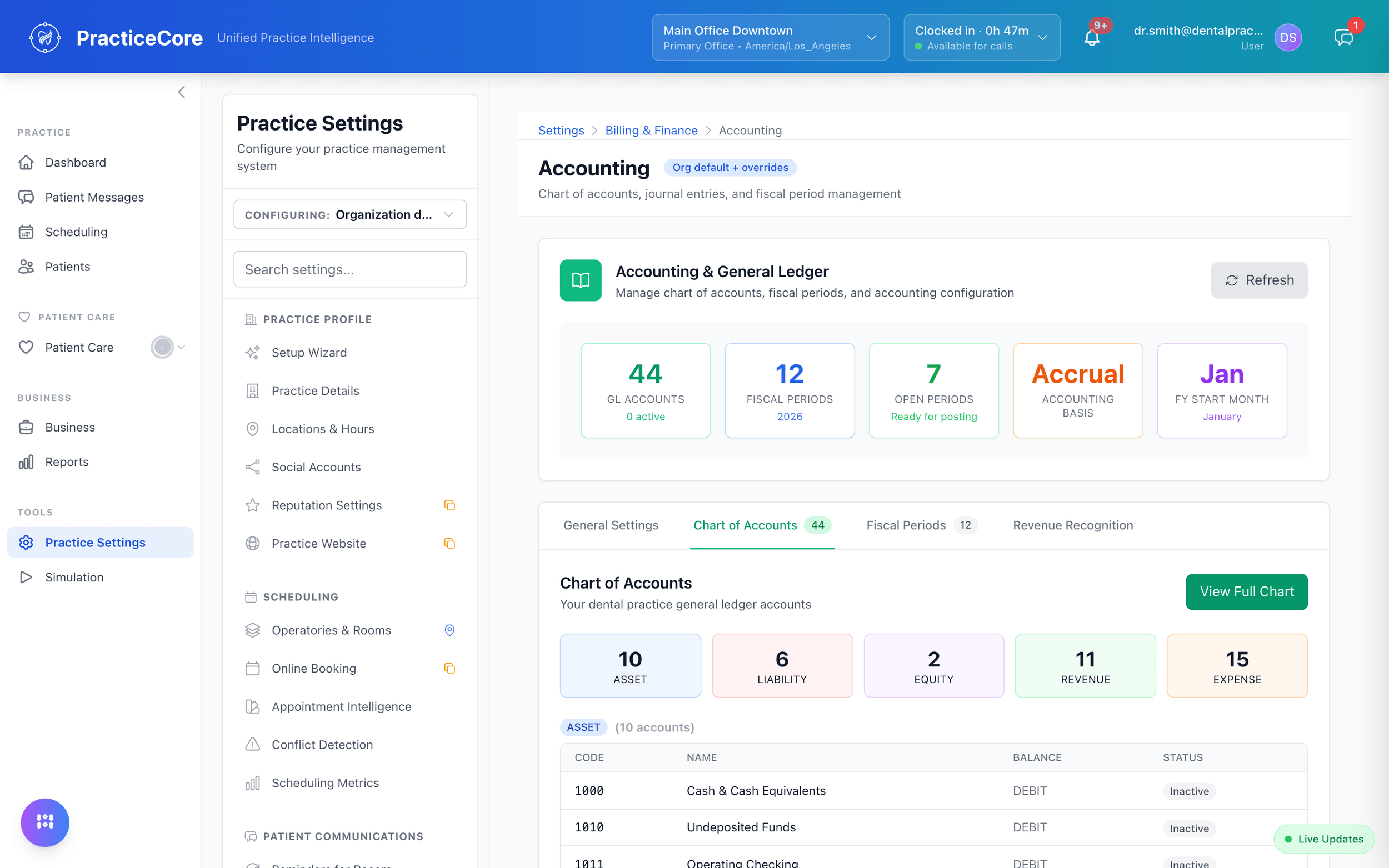
A general ledger, not an export.
A chart of accounts, fiscal periods, accrual or cash basis, revenue recognition. Charges and payments post to the ledger as they happen.
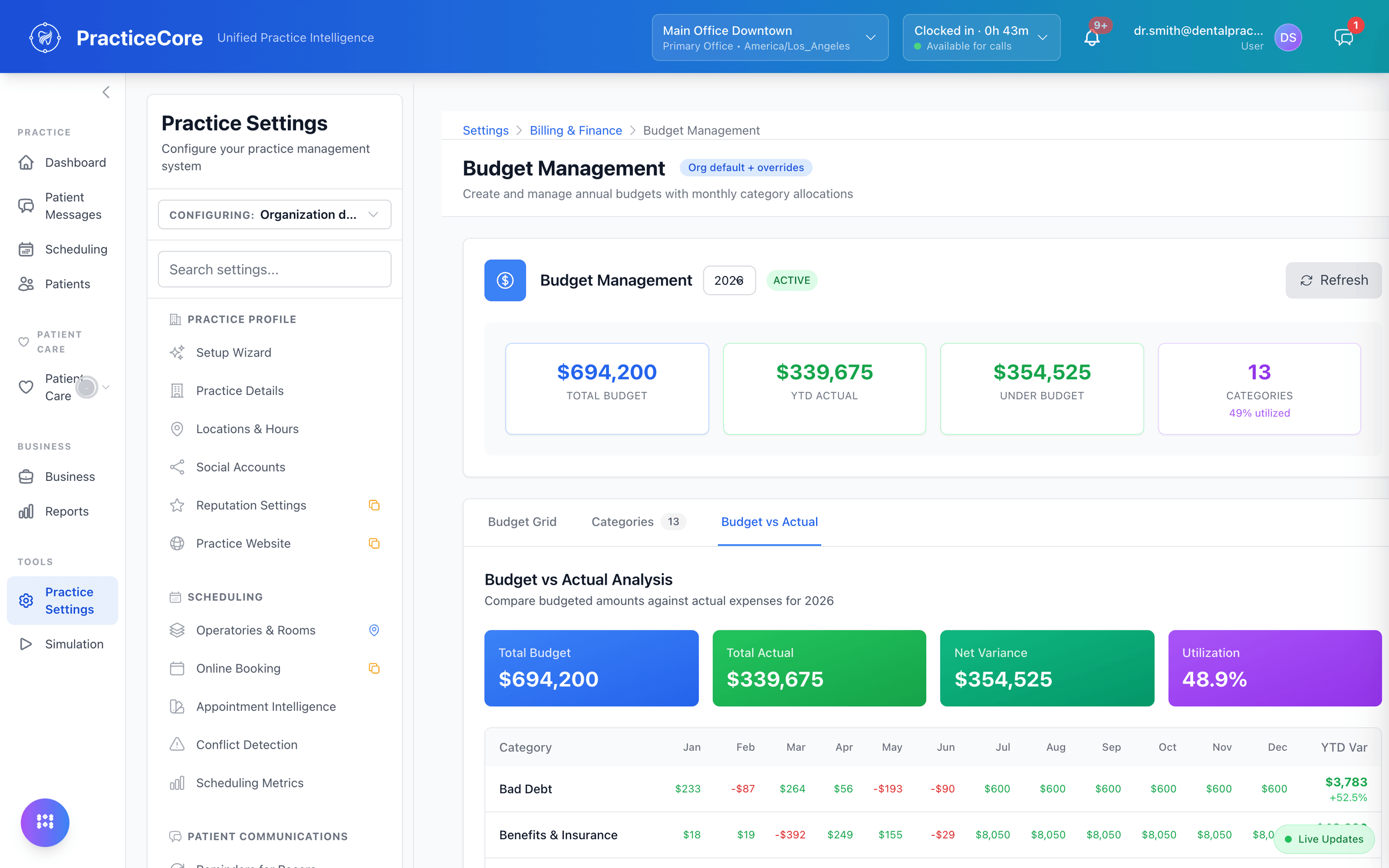
A budget, against actuals.
Annual budgets with monthly category allocations, and the variance as the year runs. Utilization at a glance, the categories that are over in red.
And the rest.
Pre-authorizations
Requested, tracked and attached to the plan they belong to.
AR that ages visibly
Balance aging by patient and payer, surfaced before it becomes a collections problem.
Expenses and vendor bills
Enter expenses, create and pay vendor bills, and see them land in the ledger.
Payment reminders
Statements and payment nudges run as automations, from the same record the front desk uses.
Fee schedules and contracts
Per plan and per location, with the contract rates the estimate actually uses.
Payroll
Run from the hours the time clock already has. See the team page.
Watch a claim get worked, then watch it post.
We'll bring a messy one.